
Probate Falls Under Pike County Chancery Court
Pike County does not run a stand-alone probate court. In Mississippi, probate is an equity matter, and equity matters belong to Chancery Court. The Chancery Clerk, Becky Buie, serves as clerk for that court and holds the case files. So when people talk about Pike County probate records, they are really talking about Chancery Court records that cover estates, wills, guardianships, and conservatorships.
Chancery Court handles a wide range of equity and domestic work. Estates, guardianships, conservatorships, divorces, child custody, adoption, property disputes, and other matters of equity are all filed there. Mississippi Judiciary materials describe these courts as the venue for wills, sanity hearings, guardianships, and related matters. Probate sits inside that broader docket rather than in a separate building or office.
The Mississippi Judiciary describes Chancery Court jurisdiction on its official Chancery Courts page.
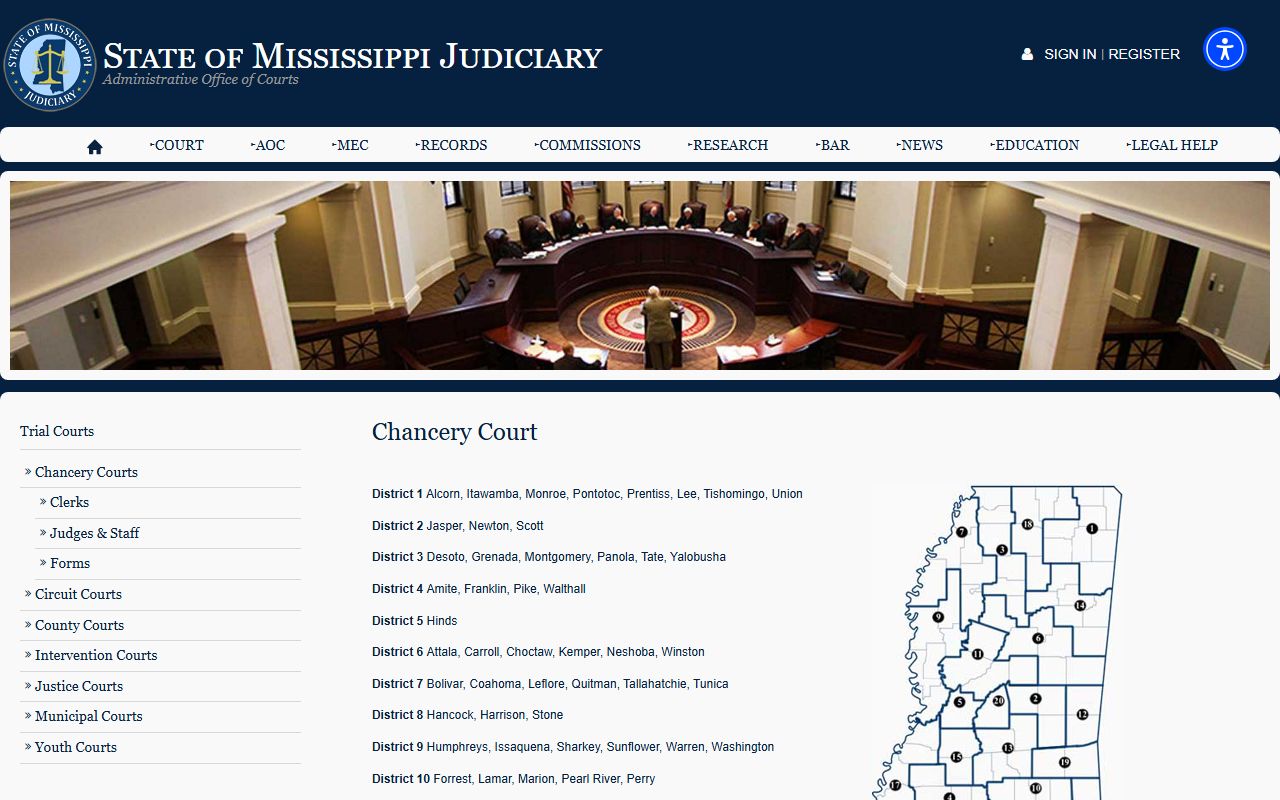
That page confirms the structure used across the state, and it is why a Pike County probate search starts with the Chancery Clerk rather than a probate-court clerk.
Pike County Probate Terms Defined
Probate filings use words that rarely show up in daily life. A short glossary helps before a search begins, because the index and the docket use these exact terms to label parties and documents.
- Testator
- The person who made the will. The will speaks for the testator after death.
- Executor
- The person named in a will to carry it out, gather assets, pay debts, and distribute property.
- Intestate
- Dying without a valid will. The court then appoints an administrator and follows state inheritance rules.
- Administrator
- The person the court names to settle an estate when there is no will or no named executor.
- Letters testamentary
- The court order that gives an executor legal authority to act for the estate.
- Guardianship
- A court arrangement that places a minor or an incapacitated person under the care of an appointed guardian.
- Conservatorship
- A court arrangement where a conservator manages the property and finances of someone who cannot do so alone.
How to Search Pike County Probate Records
There is no single free search that returns every Pike County probate file. The records sit with the Chancery Clerk, and several channels reach them. Some users start online, while others go straight to the courthouse or a written request. The best path depends on how old the file is and whether a certified copy is needed.
The county's Chancery official-records inquiry portal is the public landing page for these files.
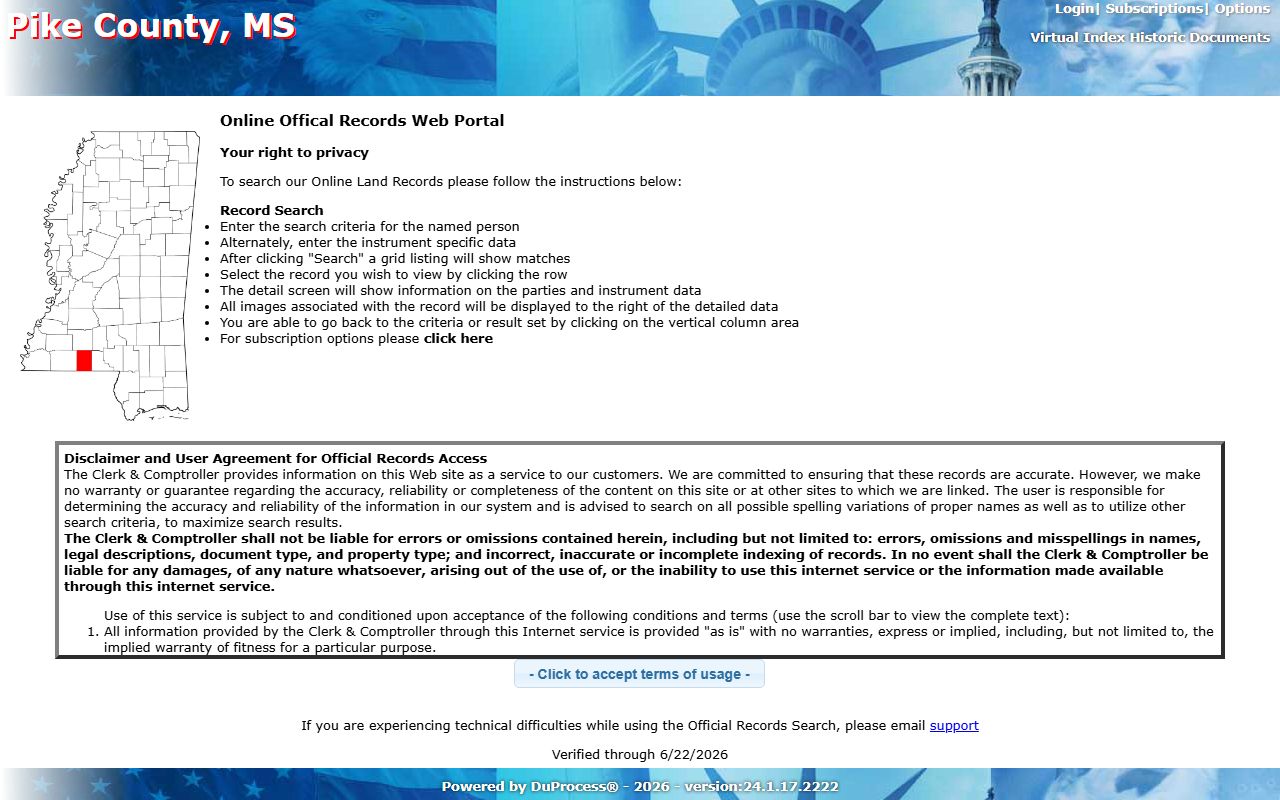
That portal, the Chancery Court Case Info link on the county homepage, and the statewide Mississippi Electronic Courts system are the main online routes, though coverage varies and some screens are gated.
- Start with the Chancery official-records inquiry portal or the Chancery Court Case Info link on the Pike County homepage to look for the estate, will, or guardianship file.
- Search by the decedent's or ward's name. Add an approximate filing date or an estate number if you have one, since older files are indexed by name and book reference.
- Try the statewide Mississippi Electronic Courts entry page if the case may be electronic, though it can sit behind a captcha.
- For older, sealed, or non-digitized files, and for any certified copy, contact the Chancery Clerk directly by phone, mail, or in person.
- If a record is hard to retrieve online, file the Pike County Information Request Form as the universal fallback.
Chancery Court Contact for Pike County Probate
Because Chancery Court is the probate venue, every probate question routes to the Chancery Clerk's office in Magnolia. The clerk confirms whether a file exists, where it is stored, what a copy costs, and how to certify a document. Calling ahead saves a trip when a record turns out to be old, sealed, or held in a different format.
Pike County Chancery Clerk
200 E. Bay Street
Magnolia, MS 39652
Mailing: P.O. Box 309, Magnolia, MS 39652
601-783-3362
Mon-Fri 8:00 a.m. to 5:00 p.m.
The clerk, Becky Buie, also serves as clerk for the Board of Supervisors and as county auditor and treasurer, which is why this one office covers far more than estates. Land records and probate files share the same counter, so a request should clearly state that it concerns a Chancery Court estate, will, guardianship, or conservatorship.
Pike County Chancery Clerk Fees
Pike County's official sources do not publish a Chancery Court probate filing fee schedule. The figures the county does post cover land-record recording and document copies, not the cost to open an estate or file a guardianship petition. Anyone planning to file should confirm the current probate charges with the clerk before submitting pleadings.
The fees below are the copy and certification rates the Chancery Clerk does publish, drawn from the county recording fee sheet and the public-records form. They apply to document copies the clerk furnishes, which is the part most record seekers actually pay.
| Item | Amount |
|---|---|
| Probate filing fees (estate, will, guardianship) | Fee not located in official Pike sources |
| Copy furnished by clerk or employee | $0.50 per page |
| Copy furnished by another person | $0.25 per page |
| Certified copy | $1.00 per complete document |
| Public information request | $5.00 research fee plus $0.50 per copy |
Important: Do not assume land-record recording fees apply to probate filings. The recording charges posted by the county cover deeds and similar documents, not estate or guardianship petitions, so confirm probate filing costs with the Chancery Clerk.
What Pike County Probate Records Show
A probate file builds up over the life of a case. It opens with a petition and, where one exists, the will. From there it collects the documents that prove the estate was gathered, debts were paid, and property reached the right heirs. The mix depends on whether the person left a will and how complex the estate was.
Records commonly found in a Pike County Chancery probate file include:
- Petitions to probate a will or for letters of administration
- Wills admitted to probate and any related codicils
- Letters testamentary or letters of administration
- Creditor notices and inventories of estate assets
- Accountings, heirship determinations, and guardianship or conservatorship reports
- Orders, bonds, and final decrees closing the estate
Certified copies of these documents are often needed by banks, title companies, and the tax collector when an heir transfers land or a vehicle. For a related family record, a divorce or custody decree from the same court is covered on the Pike County marriage and divorce records page.
Guardianships and Conservatorships in Pike County
Not every Chancery probate matter follows a death. Guardianships and conservatorships protect living people who cannot fully protect themselves. A guardianship usually covers a minor or an incapacitated adult, placing decisions about care in the hands of an appointed guardian. A conservatorship focuses on money and property, naming a conservator to manage assets and report to the court.
These cases generate ongoing filings. The court may require a bond, periodic accountings, and reports that show the ward is being cared for and the money is being handled properly. Because they involve minors, health, and personal finances, parts of these files are sensitive and may be limited. The clerk can explain which documents are open and which need authorization.
Restricted Pike County Probate Records
Probate files are public in large part, but they are not wide open. Guardianship, conservatorship, minor, medical, and financial details may be restricted or redacted. Mental-health and commitment matters that reach Chancery Court often contain medical information and are not ordinary public files.
Personal identifiers add another layer of protection. Social Security numbers, financial account numbers, and minor-identifying details may be withheld or blacked out even in an otherwise open file. When a record involves a child or a protected adult, expect access to belong to the parties, their attorneys, and people with court or statutory authorization. The Chancery Clerk applies these limits and can confirm whether a specific file or document is available before a request is filed.
How Probate Works in Pike County
The path through Chancery Court follows a familiar order, whether the matter is an estate or a guardianship. Knowing the steps helps a family or a record seeker understand what should already be on file and what is still to come.
- Decide whether the matter is an estate, a will, a guardianship, a conservatorship, or another equity matter.
- Contact or file with the Pike County Chancery Clerk, since Chancery Court is the probate venue.
- Provide the decedent or ward name, the death date or the incapacity context, the petitioner's information, and whether a will exists.
- File the required pleadings and pay the filing fees, which were not located in official Pike sources and should be confirmed with the clerk.
- The chancellor may issue letters, set inventory and accounting requirements, order creditor notices, supervise a guardianship or conservatorship, and enter final orders.
- Request copies from the Chancery Clerk, including certified copies for banks, land records, vehicle titles, or other estate tasks.
For a fuller picture of the office that keeps these files and its other duties, see the Pike County Chancery Clerk page.