
Pike County Arrest Records and Court Charges
A Pike County arrest record is the record of the arrest itself. It captures who was taken into custody, who made the arrest, and the booking details logged when the person was brought in. In Pike County a criminal matter usually begins with an arrest, citation, affidavit, indictment, or other charging instrument, depending on the offense. The arrest is the starting point, not the formal accusation. That formal accusation comes next, when a prosecutor reviews the facts and decides which charges to file with the proper court.
The court charge record is different. It is the formal allegation tied to that arrest, warrant, citation, affidavit, indictment, or information. Charge information can appear in the sheriff's booking record, in Justice Court misdemeanor and traffic files, in McComb or Summit Municipal Court files, in County Court files, or in Circuit Court felony files. Someone asking what court charges came after an arrest should check two places: the jail or sheriff for booking information, and the right court for the filed case. The booking and custody side lives on the Pike County inmate records page, while the full case file, plea, and sentence are covered under criminal court records.
How to Find Pike County Arrest Records and Charges
Pike County does not offer one open search that returns every arrest and every charge in a single place. Charges are scattered across the court that handled the case, so the first job is matching the charge to the right court level. Felony charges land in Circuit Court, county and state traffic and misdemeanor charges in Justice Court, and city charges in the McComb or Summit municipal courts. The booking record that ties to the arrest is held by the sheriff, not the court clerk.
- Identify the court level for the charge. Felony charges and indictments go to Circuit Court; sheriff and state tickets, DUI, and misdemeanors go to Justice Court; city offenses go to a municipal court.
- For Circuit Court matters, use the county's Circuit Court case information route, which opens the Delta Computer Systems Circuit Court Link. It is a paid subscription service, not a free public search.
- Search by case number if you have it, or by party name in last-first order, then read the charge list shown on the case.
- Check each charge for its statute, level, and current status, and confirm whether the charge was later amended, reduced, dismissed, or carried to disposition.
For arrest and booking detail rather than the filed charge, the custody side is the place to look. Records that are not online, older files, and certified copies should be requested from the clerk of the court that holds the case, or through the Pike County Information Request Form as a general fallback. Statewide charge and criminal-history lookups are covered further down.
Pike County Sheriff Booking vs Court Filing
The booking and the charge filing are two separate events handled by two separate offices. When someone is arrested in Pike County, the Sheriff's Office books them into the Pike County Detention Center, which is where custody, bond, and release questions are answered. Booking creates the arrest record. It does not by itself create the court charge record. That happens when a prosecutor or charging officer files the accusation with the court.
City arrests follow their own booking path. McComb Police run processing and booking around the clock for city matters, separate from the county detention center. The official complaint and report side of a McComb case shows how a charge can begin with a sworn complaint or an officer's incident report rather than a database entry.
Anonymous tips can also start the chain that leads to an arrest. The McComb Police Department announced a tip411 tool that lets the public report information without giving their name.
The tip411 announcement for the McComb Police Department describes texting the keyword MCCOMBPD to 847411 and using the mobile app for anonymous two-way messages.
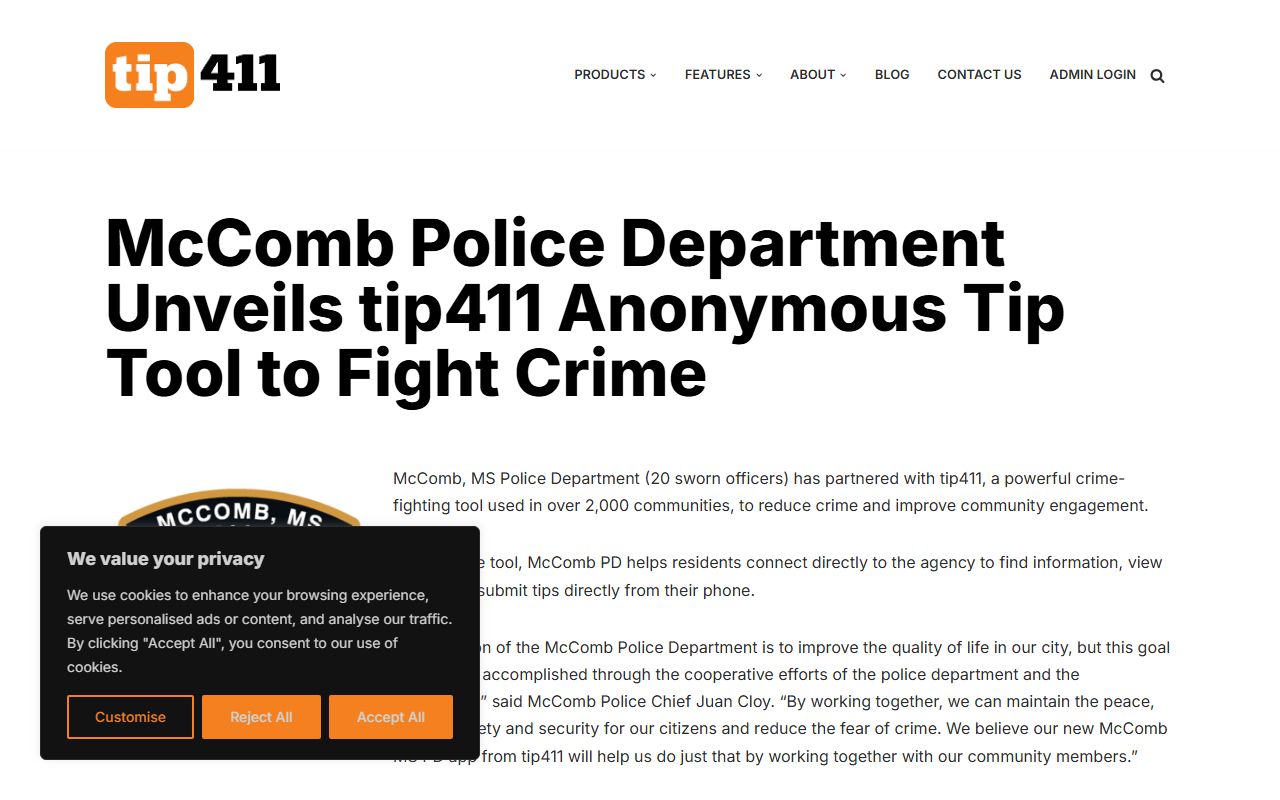
The tool only handles anonymous tips and crime alerts, so it does not look up an arrest record, a charge, a warrant, or an inmate. For custody and booking facts after an arrest, the detention center phone line is the direct contact.
Pike County Detention Center
1201 B North Clark St.
Magnolia, MS 39652
Detention Center: 601-783-2324
McComb processing and booking: 601-684-3214 (24 hours a day)
Note: Pike County official sources do not publish an online jail roster, so booking detail is confirmed by phone or in person rather than through a public lookup.
How Pike County Charges Get Filed After an Arrest
After the arrest, the court charge record begins when a charging document is filed. The type of document depends on how serious the offense is and which court hears it. A misdemeanor often starts with an affidavit or complaint, while a felony usually requires a grand jury indictment in Circuit Court. A prosecutor can also charge some matters by filing an information. Each one opens a case and frames the formal accusation the defendant must answer.
The most detailed city example is McComb, where Court Services explains that arraignment is the first appearance after arrest, the point where the defendant pleads guilty or not guilty to the charge that was filed. The city complaint and report options show how those charges are documented.
The McComb Police complaints and report page lists incident and offense reports, accident reports, and sworn criminal complaints.
A report or sworn complaint like these can be the first paper that turns an arrest into a filed charge. The table below compares the three charging documents that open a case in Mississippi.
| Complaint | Information | Indictment | |
|---|---|---|---|
| Filed By | Officer or prosecutor | Prosecutor | Grand jury |
| Common For | Misdemeanors | Some felonies | Felonies |
| Typical Court | Justice or Municipal | Circuit | Circuit |
| Starts | The case | The case | The case |
Who Files Pike County Charges
Felony charges in Pike County are filed and prosecuted by the District Attorney for the 14th Circuit Court District, which covers Lincoln, Pike, and Walthall Counties. The district attorney's office decides whether the evidence from an arrest supports a charge, what that charge should be, and whether the case goes to a grand jury for indictment. The office runs more than felony trials. It also operates a Felony Bad Check Unit, a Child Support Collection Unit, Pre-Trial Diversion, Victims' Assistance, and Delinquent Fine Collections.
Pre-Trial Diversion matters here for charge records. A defendant accepted into diversion may complete conditions instead of facing a standard prosecution, which can change how the charge resolves. For lower-level matters, a city prosecutor or charging officer handles the filing in municipal court, and the Justice Court handles county and state misdemeanor and traffic charges. Once a charge is filed, an eligible defendant who cannot afford a lawyer may receive appointed counsel.
The Mississippi Office of State Public Defender maintains statewide indigent-defense and public-defender directory resources.

No Pike-specific public-defender office page with named counsel was located in official sources, so appointment information should be requested from the court handling the criminal case or through the state office directory.
Pike County Charge Status Terms
A charge rarely stays exactly as first filed. As a case moves, charges can be amended, reduced, added, dropped, or dismissed, and the docket records each change. Reading the current status matters as much as reading the original charge, because the first accusation and the final outcome are often not the same thing. The terms below appear in Mississippi court records and explain where a charge stands.
| Status | What It Means |
|---|---|
| Pending | The charge has been filed and the case is still open, with no final outcome entered yet. |
| Amended / Reduced | The charge was changed, often to a lesser offense, before the case was resolved. |
| Dismissed | The court ended the charge without a conviction, sometimes on a motion or for lack of evidence. |
| Nolle Prosequi | The prosecutor formally chose not to pursue the charge, dropping it from the case. |
Disposition is the field that records the final or current result of a charge, such as a plea, dismissal, sentence, or judgment. A charge that was dropped or dismissed still leaves a record of having been filed, which is one reason a charge record and a conviction record are not interchangeable.
Pike County Charge Codes and Severity Levels
Each charge ties to a specific statute or city ordinance, and that citation acts as the charge code. The code fixes the offense and points to the law that defines it. The severity level then drives which court hears the case. Misdemeanors and county or state traffic offenses move through Justice Court, city offenses through municipal court, and felonies through Circuit Court, with County Court handling certain transferred noncapital felonies and concurrent matters.
A single arrest can produce several separate charges at once. Booking, citation, affidavit, indictment, or information can each list more than one offense, and every charge carries its own code, level, and status as the case proceeds. The typical path runs from the limited-jurisdiction courts up to Circuit Court for serious matters: Justice or Municipal Court for misdemeanors, then Circuit Court for felonies after indictment or bind-over. The full record of how each charge resolved, including pleas and sentencing, is part of the Pike County criminal court records for the case.
Charges vs Convictions in Pike County
Being charged is not the same as being convicted. A charge is an accusation filed after an arrest. A conviction is what happens only if the case ends in a guilty plea or a guilty verdict. Many charges are reduced, dismissed, or dropped, and a person can carry a charge record without ever being convicted. The comparison below sets the two side by side.
| Charge | Conviction | |
|---|---|---|
| Stage | Accusation after arrest | Guilty plea or verdict |
| Burden of Proof | Probable cause | Beyond a reasonable doubt |
| Decided By | Prosecutor or grand jury | Judge or jury |
| Public Record | Yes | Yes |
Statewide Charge and Criminal History Lookups
Local charge records do not always show what happened to a person after sentencing. When a Pike County felony charge ends in a state prison sentence, the offender moves into the custody of the Mississippi Department of Corrections, and that is where a statewide lookup helps. The state inmate search returns sentenced state offenders, not local pretrial jail bookings, so it is a follow-the-charge tool rather than an arrest lookup.
The Mississippi Department of Corrections inmate search lets you search by first name, last name, or MDOC ID number.
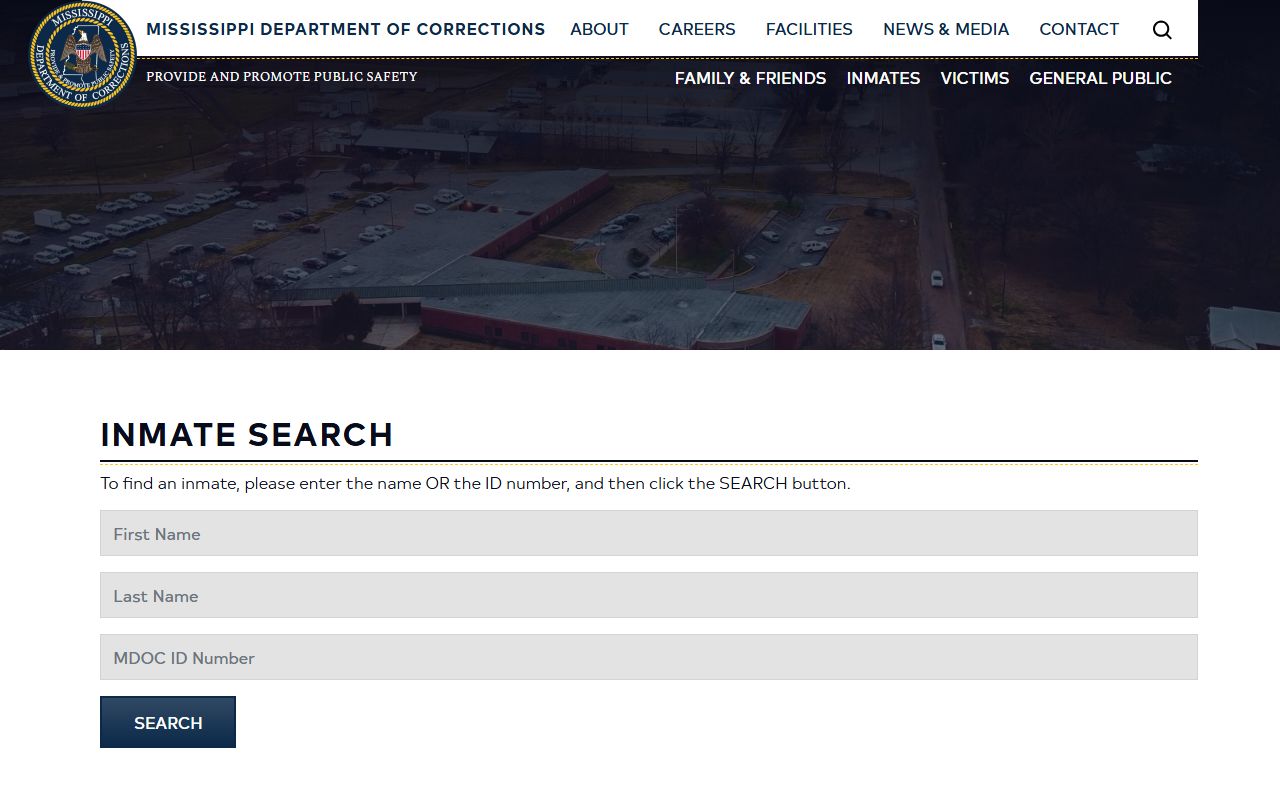
The form accepts a name or an ID number and returns state-custody offenders. Because the search only covers people already sentenced to state custody, it will not show someone whose charge is still pending in a Pike County court or who is held in the county detention center. Mississippi court records are generally public under the Public Records Act, found at Miss. Code Ann. section 25-61-1, though that access runs through the office that holds each record rather than one statewide charge database.
Sealed vs Expunged Pike County Records
Not every charge stays publicly visible. Mississippi law lets certain charges and convictions be sealed or expunged, and the two are not the same. A sealed record is restricted from public view but still exists. An expunged record is treated as though it never happened. Mississippi provides a petition process for some misdemeanor and felony expunctions, with eligibility limits that depend on the charge, the outcome, and timing.
| Sealed | Expunged | |
|---|---|---|
| Visibility | Hidden from public view | Treated as if it never existed |
| Law Enforcement | Limited access remains | Very limited access |
| Eligibility | Depends on charge type, disposition, and minor or sensitive content | Petition under Miss. Code Ann. section 99-19-71, with charge, disposition, and waiting-period limits |
An expunction normally starts in the court where the case or conviction sits. A Justice Court misdemeanor begins with the Pike County Justice Court, a felony or Circuit Court case begins with the Circuit Clerk, and a city conviction begins with the municipal court such as McComb Court Services or Summit Municipal Court. The petitioner usually needs the case number, charge, disposition, and proof that any waiting period, fine, or supervision condition has been met.
Background Check Considerations
A casual charge lookup and a regulated background check are not the same thing. Reading a Pike County charge record for personal information is fine, but using charge or arrest data to decide on employment, housing, credit, or insurance falls under the federal Fair Credit Reporting Act. Those decisions require a compliant consumer report from a credit reporting agency, not a quick search of a court index. Charge records also need careful reading, since a filed charge that was later dismissed or reduced does not mean a conviction.
Important: This site is not a consumer reporting agency under the Fair Credit Reporting Act, and its information may not be used for employment, housing, credit, or other FCRA-regulated decisions.
Restricted Charge Records in Pike County
Some Pike County charge records are not open to the public. Youth Court matters involving children under 18 are generally closed and sealed, so juvenile charges do not appear in ordinary public searches. Sealed and expunged criminal charges may vanish from public view or show only limited metadata. Adoption and mental-health proceedings carry their own confidentiality, and personal identifiers such as Social Security numbers, dates of birth, and minor-identifying details are often redacted or withheld.
Charges tied to an active investigation may also be held back before a case is filed. When a record cannot be found online or appears restricted, the right step is to ask the clerk of the court that handled the matter, or to file a Pike County Information Request Form. Youth Court, adoption, sealed, expunged, medical, and minor-identifying material should never be assumed to be public.